

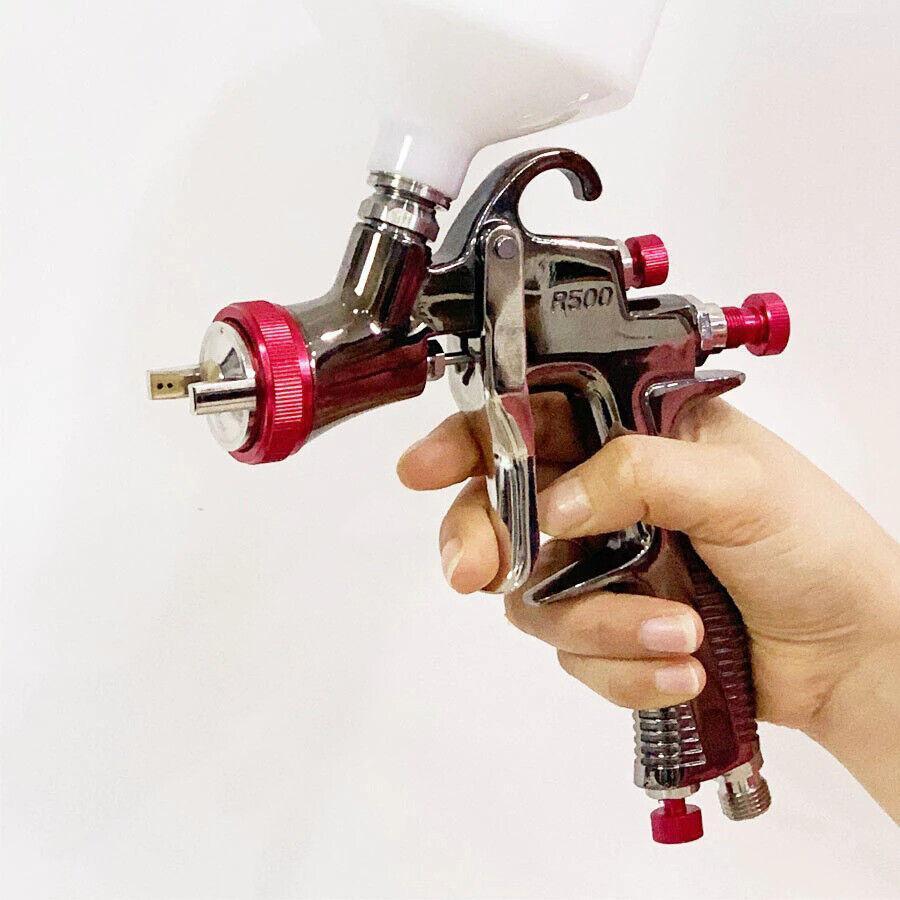
An LVLP (Low Volume Low Pressure) spray gun is a type of paint sprayer used for professional painting jobs. It is designed to deliver a fine, even coat of paint with less overspray than other types of spray guns. An LVLP spray gun uses a lower air pressure than HVLP (High Volume Low Pressure) or conventional spray guns, allowing it to achieve a high degree of atomization and finer results. The result is a smoother, more even finish with minimal overspray and waste.
An LVLP spray gun is a great choice for professional painters, as it offers several advantages over other spray guns.
1. Lower Air Pressure Requirements: The low air pressure requirements of an LVLP spray gun make it ideal for use with smaller compressors, making it an economical choice for painters who don’t need the power of a larger compressor.
2. Less Overspray: The low air pressure also results in less overspray, meaning less wastage and a smoother finish.
3. Better Atomization: The low pressure of an LVLP spray gun allows for better atomization of the paint, resulting in a finer, more even finish.
4. Improved Control: The low air pressure and better atomization of the paint mean that the painter has more control over the spray pattern, making it easier to achieve a consistent finish.
Although an LVLP spray gun has many advantages, there are also a few drawbacks to consider.
1. Lower Output: The low air pressure of an LVLP spray gun means that it has a lower output than other types of spray guns, making it less suitable for larger projects.
2. More Expensive: Due to its lower output and the need for a smaller compressor, an LVLP spray gun is usually more expensive than other types of spray guns.
3. More Maintenance: An LVLP spray gun needs to be cleaned and maintained more often than other types of spray guns, as it is more sensitive to pressure and temperature changes.
An LVLP spray gun is an excellent choice for professional painters looking for a high quality finish with minimal overspray. It requires less air pressure, allowing it to be used with smaller compressors, and produces a finer, more even finish. However, it is also more expensive and requires more maintenance than other types of spray guns, making it best suited for smaller projects.